Easy read and translate



Ankle tendon pain
Do you have ankle tendon pain?
There are two main types of ankle tendon problems:
- Achilles tendon tibialis
- posterior tendon
These problems can take a long time to resolve, it can be painful with rest and less painful with activity.
Achilles tendon problems
The Achilles Tendon connects the large calf muscle to the heel bone. It allows you to point your toes and is particularly important in walking and climbing stairs.
Symptoms:
- Pain directly over the Achilles, tender to touch.
- Pain and stiffness on waking, which improves with movement.
- Pain on walking, running or stairs.
- Pain after activity.
- If you have been wearing shoes with poor cushioning, with poor arch support.
- If you are overweight – this will put extra strain on your heel if there is an overuse or stretching of your sole e.g. athletes who increase running intensity or distances.
- If you have a tight Achilles tendon.
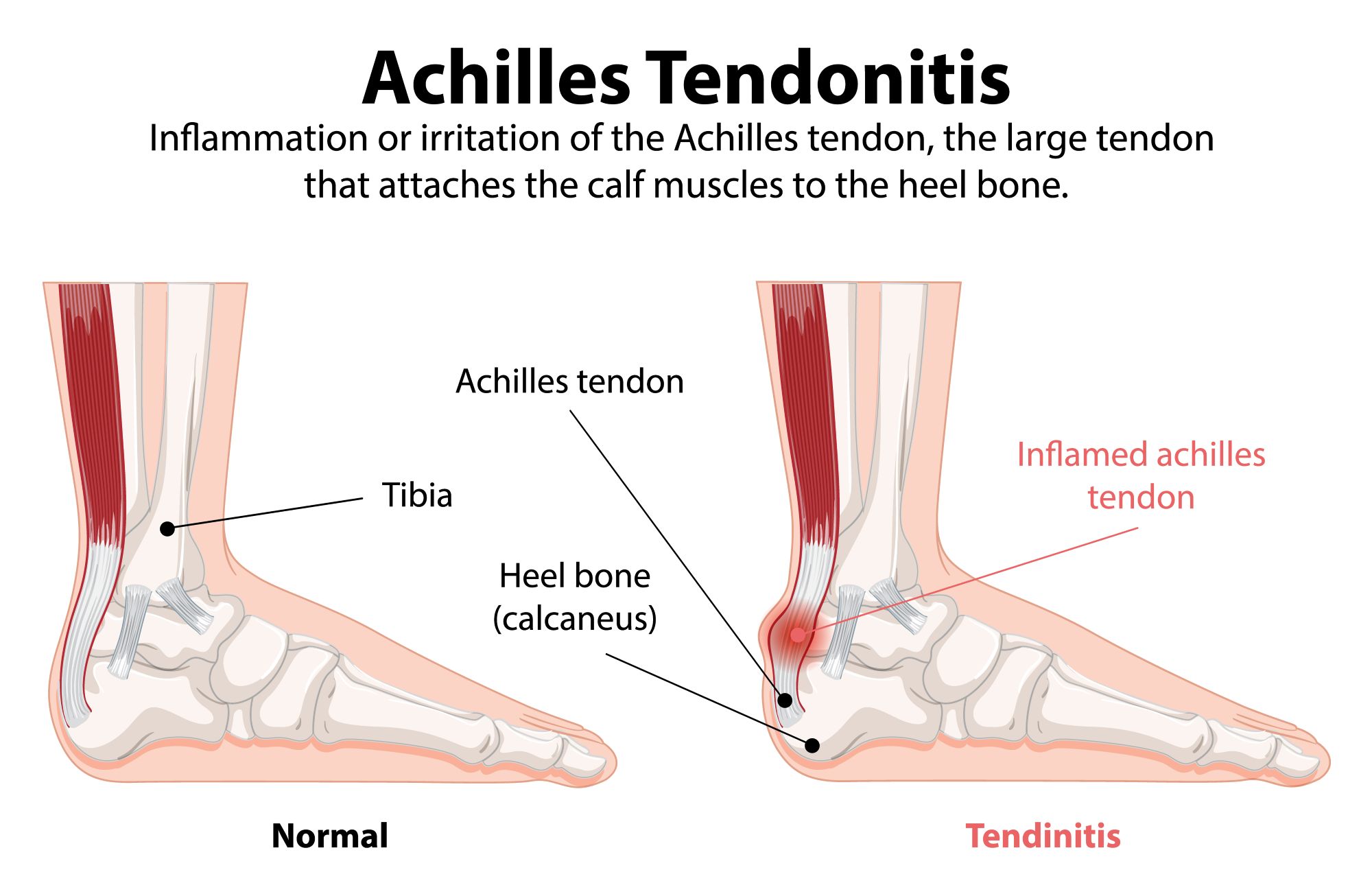
Tibialis posterior tendon problems
The Tibialis Posterior is located in the lower leg. The tendon passes down the back of the leg, inside the ankle and under the foot. It is particularly important in walking to maintain the arch of the foot and stop us from getting “flat feet.”
Symptoms:
- Pain anywhere tracking the tendon from behind the inner ankle bone to inner aspect of the foot just above the arch.
- Pain replicated on single stance heel lift.
- Pain worsens with activity involving repeated flexion of foot.
Top tips
Read our top tips for improving ankle tendon pain.
- Try an ice pack on the tendon for 10 minutes (wrap it in a damp towel to avoid an ice burn). This can be done regularly for the duration of the pain.
- Take pain relief recommended from your GP.
- Consider insoles to support the arch of your foot.
- Wear appropriate supportive footwear with good arch support that is secure around the heel.
- Activity modification, regular gentle activity can help to ease the pain. Avoid excessive repetitive stress such as running.
Do not use ice on your ankle if you have poor sensation over the area, an infected wound, Raynauds Syndrome or Cryoglobulinaemia.
How much pain is too much pain?
Before exercising
Before exercising, rate your pain at the moment on a scale of 0 to 10, where 0 is no pain and 10 is the worst pain you can imagine.
A maximum pain level
A maximum pain level of 4/10 whilst exercising is fine as long as it eases within 45 minutes of the session and does not interfere with sleep or activities the next day.
If your pain increases
If your pain increases beyond this, simplify the exercise by reducing the range of movement or number of repetitions, or try an easier exercise.

Exercise programme
Please complete exercises A and B everyday for the next 12 weeks, alongside Phase 1.
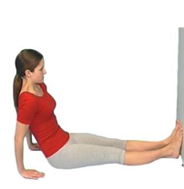 sitting with arm support. Feet resting against a wall.
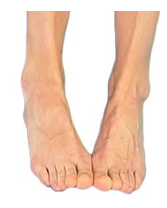 on a chair or on the floor. Put the inner borders of your big toes together.
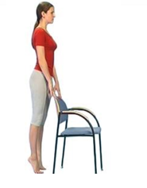 Start by doing as many reps as your symptoms will allow - with a maximum of 15 reps. Repeat 3 times.
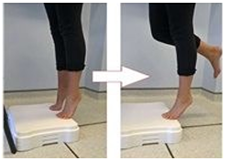 Start by doing as many reps as your symptoms will allow - with a maximum of 10 reps.
 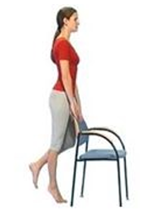 Start by doing as many reps as your symptoms will allow - with a maximum of 10 reps.
 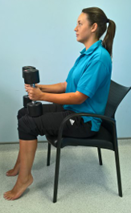 by doing as many reps as your symptoms will allow - with a maximum of 10 reps.
 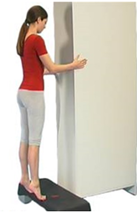 Start by doing as many reps as your symptoms will allow - with a maximum of 15 reps. Repeat 3 times.
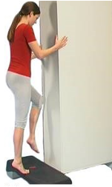 Start by doing as many reps as your symptoms will allow - with a maximum of 15 reps. Repeat 3 times.
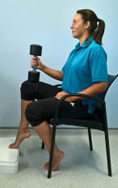 by doing as many reps as your symptoms will allow - with a maximum of 15 reps. Repeat 3 times.
 Need more help?
Consider self referring using the link below:
If you have a new injury or problem, please look at the self help information in our advice pages. We will often complete the same exercises and share information in clinic appointments.
If you still need some more help you can self refer into our service. Please note that the NHS is currently experiencing longer than normal waits, for more information visit our waiting times page.