Easy read and translate



Pelvic floor exercises for men
Understanding the pelvic floor
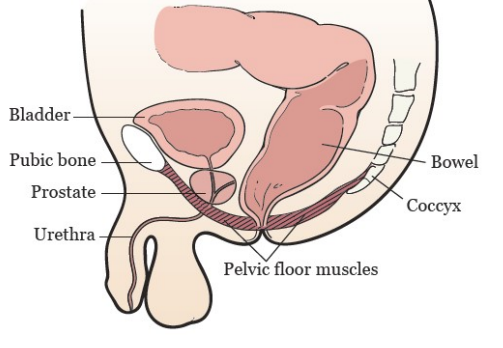
The pelvic floor muscles form a hammock underneath your pelvis to provide support and control of your bladder and bowel. The muscles attach to your pubic bone at the front, then span backwards to your coccyx (tail bone), and outwards to your sitting bones. The opening of your bladder and your bowel pass through the pelvic floor. The muscles also contribute to sexual satisfaction
What does the pelvic floor do?
- It supports your pelvic organs and abdominal contents especially when standing or when there is an increase in pressure in your abdomen (intra-abdominal pressure) with activities such as lifting, bending and straining.
- It helps keep the bladder and bowel openings closed to prevent unwanted leakage. The muscles need to work gently most of the time and also be able to work harder when your intra-abdominal pressure increases. For example, when you cough, sneeze, lift or exert yourself.
- It is used to control wind and when ‘holding on’ with your bowels.
- It can help improve strength and endurance of erections.
Why should I exercise my pelvic floor muscles?
Up to 1 in 9 men experience a problem with their pelvic floor muscles at some time in their life. Your pelvic floor muscles need to be strong but they also need to work in the right way at the right time. Symptoms you may be experiencing could include:
- urinary leaking with activities such as coughing, laughing,
sneezing, lifting and jumping - a sudden need to rush to the toilet or leaking on the way to the
toilet - a need to go to the toilet too frequently in the day and/or the
night - leakage of faeces or difficulty controlling wind
- a reduction in ability to achieve or maintain an erection
How to do pelvic floor exercises
A pelvic floor contraction is performed by closing and drawing up your front and back passages. Imagine you are trying to stop yourself passing wind at the same time as trying to stop your flow of urine. It
should be a sensation of ‘tighten and lift’.
You may also imagine that you are lifting your testicles up inside, or trying to ‘twitch’ your penis as it is the pelvic floor muscles that do these movements.
You should:
- continue to breathe normally
- keep your buttocks and legs relaxed though you may feel a gentle tightening of your tummy
- always let your muscles fully relax at the end of a contraction
You need to practice long contractions as well as short ones.
Exercises to support your pelvic floor muscles
- Aim to do these exercises 3 times a day but start with a small amount and build up gradually as you feel able.
- The exercises should not make you feel uncomfortable or cause you to leak.
- Aim for quality rather than quantity.
- Gradually build up your hold times and repeat times as the exercises become easier until you reach the maximums stated.
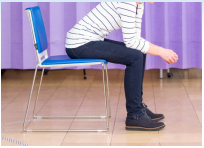
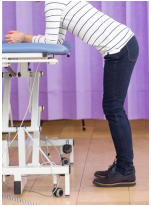
- You may find it easier to do your exercises lying or sitting. Sitting leaning forwards can be helpful to start with. Try the exercises in a standing position as soon as you feel able to do so. Initially you could try leaning forwards onto a worktop/table top or leaning back against a wall. When standing, turning your toes inwards or your heels inwards can help activate the front and back portion of your pelvic floor muscles respectively.
- It can take 2 to 3 weeks to improve the brain-muscle connections allowing better coordination of your pelvic floor muscles.
- It can take about 4 to 6 months to improve the strength of your pelvic floor muscles. You will need to always do some amount of the exercises to maintain their improvement.


Top tips
Read our top tips for remembering to do the exercises
It is very easy to forget to do your pelvic floor exercises. To help remember you can:
- put a reminder on your phone
- try one of the pelvic floor exercise apps that are available
- do them after emptying your bladder whilst still sitting on the toilet or standing by it
- use coloured stickers or reminder notes around the house/place of work
- use the advert break between television programmes
Squeezy app
The Squeezy for Men app offers help and guidance related to pelvic health
Other ways to help
- Tighten your pelvic floor muscles prior and during any activity that increases the intra-abdominal pressure, such as, coughing, sneezing, lifting, carrying and bending.
- Check you can breathe easily throughout your activity or exercise and that you are not holding your breath. This could include times when you are lifting something or when getting out of a chair.
- If your symptoms feel worse with certain activities or exercise, consider lower impact activities and shorter bursts of activity whilst you improve your pelvic floor function.
- Maintain a healthy body weight.
- Avoid constipation by eating adequate fibre (15 to 30g per day) and drink adequate fluids (1.5 to 2 litres per day, though more in hot weather, after exercise, during air travel and when you are ill). Many people find symptoms can be worse when they are constipated as additional pressure is placed on the pelvic floor.
Need more help?
Consider self referring using the link below:
If you have a new injury or problem, please look at the self help information in our advice pages. We will often complete the same exercises and share information in clinic appointments.
If you still need some more help you can self refer into our service. Please note that the NHS is currently experiencing longer than normal waits, for more information visit our waiting times page.